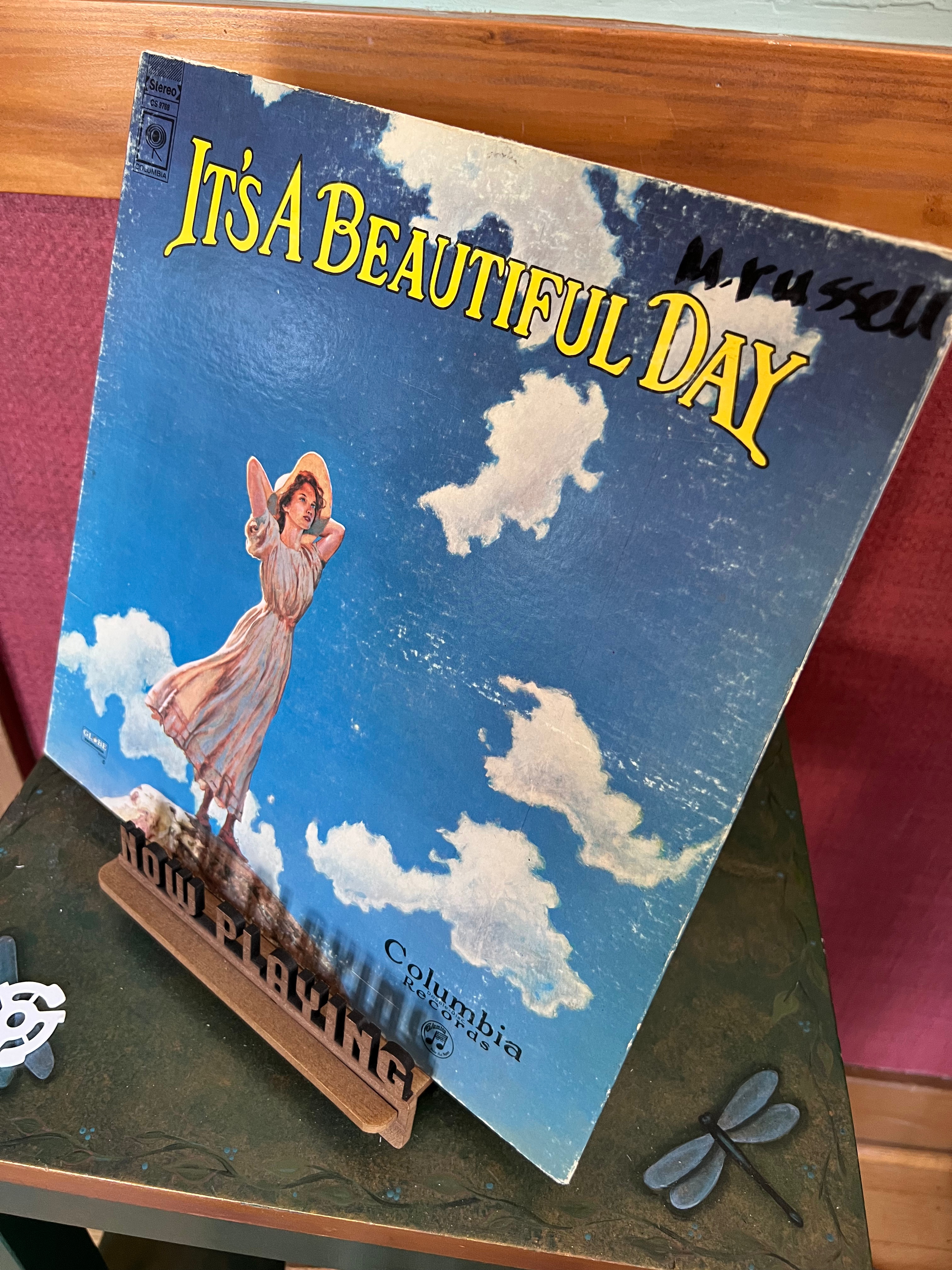
The first time I heard this record,
it was January in 2024 as I was going
through a stack of records bequeathed
to me by my brother-in-law, Kevin.
This is what I wrote:
Embarrassed a little bit to admit it,
but even though I have seen this
album cover a thousand times,
and wondered in stupefaction at the
ridiculousness of this band name
and this album cover,
I didn’t know until I put it
on the turntable that this was the band
responsible for the monster 1969 hit,
“White Bird.” That alone made this album
a keeper–but man, the rest of it. Super strange
and goofy, kind of progressive, experimental,
and silly–like the song about the woman
without eyes. File between Icehouse
and Joe Jackson.
The second time I hear this record,
it happens to be a beautiful day, April 4,
2026, with the sun out and the birds
chirping and the dogs sleeping. This album
is now filed between Illuminati Hotties
and Joe Jackson and it’s still morning.
The song “White Bird” gives way to
“Hot Summer Day,” a pretty conventional
60’s rock tune, but it gets weird fast
with the crazy rock noise jam of “Wasted
Union Blues” and then the chamber pop waltz
madness of “Girl With No Eyes.” She’s
beautiful, apparently, and even though she
doesn’t have eyes, “she appears to be
staring at me.” Well, sure she does.
Listening to It’s A Beautiful Day is not
entirely an unpleasant experience. They
could really play and sing and they were
trying all kinds of kooky things, but unlike
some of the almost unlistenable experiments
of the era, they don’t seem to be just screwing
around on the record label’s dime. Outside of
the mediocre drum solo on the last track,
I think they fancied themselves composers,
and while it doesn’t help me appreciate this
stupid cover art any better, it helps me
understand possibly why they made that choice,
trying, and failing, to somehow rise above
the image of the rock and roll hippy.
Notes on the vinyl edition: It’s A Beautiful Day, Columbia Records, 1969, black vinyl in pretty good condition.
In case you don’t already know: I’m listening to almost everything in my vinyl collection, A to Z, and writing at least one, sometimes two or three long skinny poem-like-things in response for each artist, and on a few occasions, writing a long skinny poem-like-thing in response to more than one artist. As a poet and a student of poetry, I understand that these things look like poems, but they don’t really sound much like poetry, hence, I call them “poem-like-things.” I’ll admit that they’re just long, skinny essays that veer every now and then into the poetic or lyric.
 michael jarmer