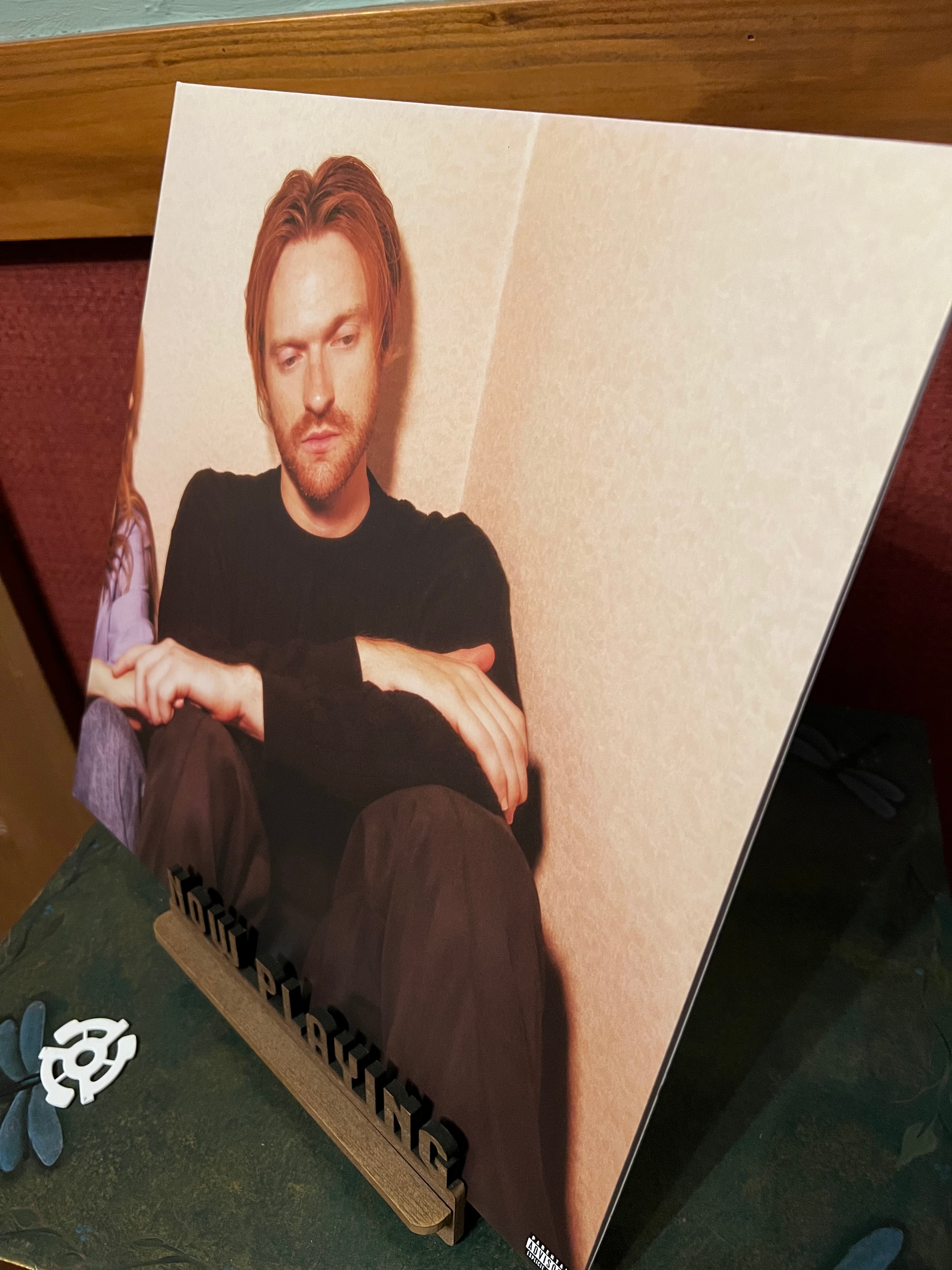
The brother of Billie Eilish, and the mastermind
behind most of her production choices, one might
think that this young man would just be a kind of
boy-version of his sister. Not even close. Listening
to Finneas, the last record, The Optimist, or this one,
For Crying Out Loud, brings into stark contrast the
two projects. Oddly, given Billie’s superstardom,
the most experimental project of the two is hers,
while Finneas’s songs are more traditional, straight-
forward, instrumentally conventional, classically
structured pop songs. There are hardly any electronics
or synthesizers, no experimental mood pieces, no
drum machines, just a good old fashion rock band
playing pure, unadulterated, thoughtful, catchy pop.
But similar to Billie, Finneas has some serious
power to pluck the heart strings. His ballads are
almost unbearable in their emotional evocation.
If I attempt on certain tunes to sing along, it becomes
very difficult to follow the line all the way through
without a break in the voice and an impulse to sob.
Try it: I dare you to sing along with “Family Feud.”
Finneas, like Billy, is most powerful when he’s singing
about the reality of his life, in particular, for him,
which has to be so central to nearly everything this
guy does, when he’s singing about his sister, or his mom.
I’ve not come across anything so wholesome in
pop culture in all of my pop culture exploration.
There is nothing ironic or cynical about either of them,
Billie or Finneas, and it is a beautiful thing to behold.
Notes on the vinyl edition: For Crying Out Loud, Interscope Records, 2024, translucent green vinyl.
In case you don’t already know: I’m listening to almost everything in my vinyl collection, A to Z, and writing at least one, sometimes two or three long skinny poem-like-things in response for each artist, and on a few occasions, writing a long skinny poem-like-thing in response to more than one artist. As a poet and a student of poetry, I understand that these things look like poems, but they don’t really sound much like poetry, hence, I call them “poem-like-things.” I’ll admit that they’re just long, skinny essays that veer every now and then into the poetic or lyric.
 michael jarmer