AI is basically sucking up all human knowledge and throwing it back at us–and charging a price.
–David Byrne
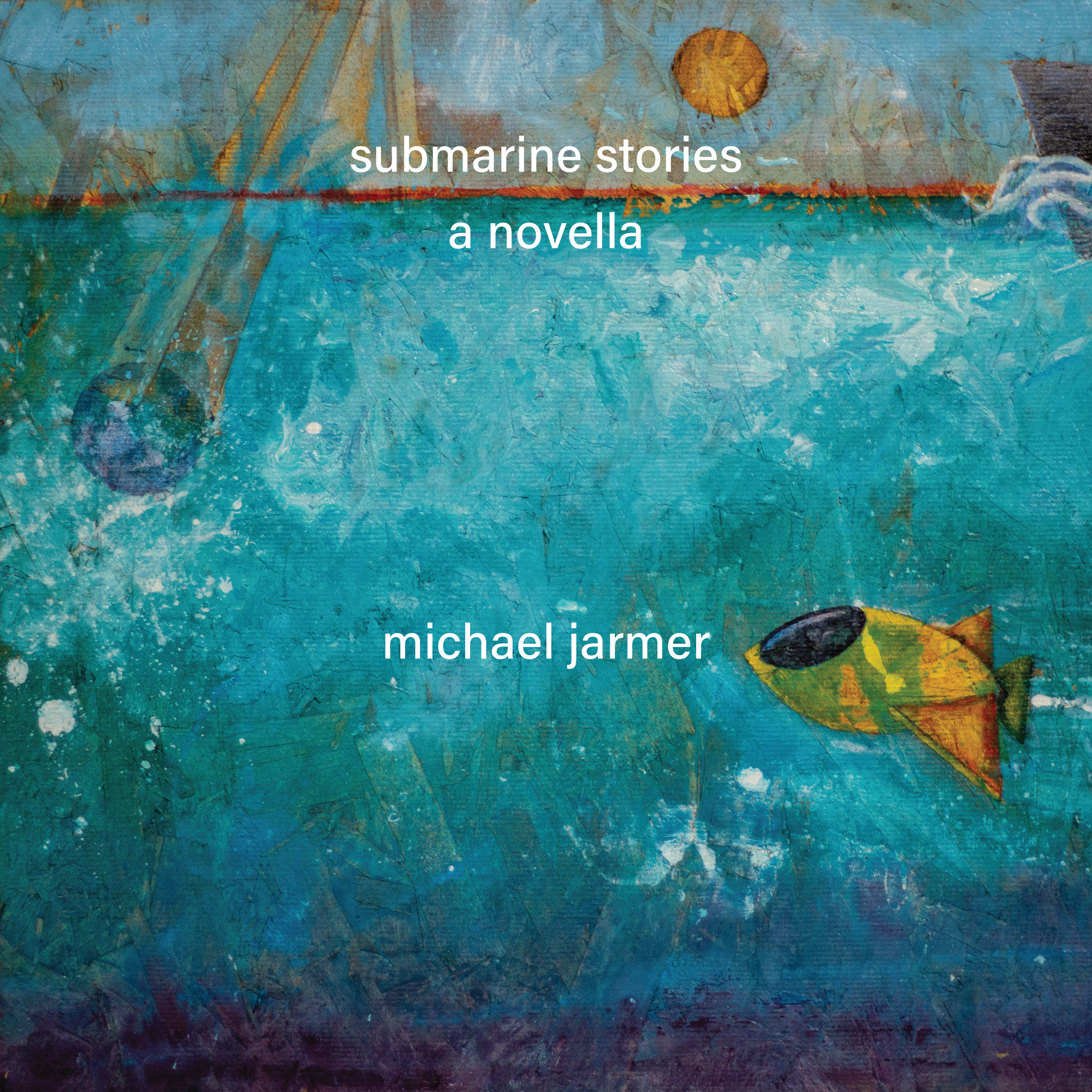
My novella, Submarine Stories, is up now for pre-order in all the usual places where you can preorder a book or its ebook counterpart. Very exciting stuff. This is my second published work of fiction, and one of the things that I have discovered as a writer on the very fringes of independent publishing, is that there are lots of people out there working on their own or for some corporation or another whose sole purpose seems to be parting writers from their money. Not discovering writers. Not supporting writers. But finding writers who are thirsty and/or desperate who might be susceptible to a grandiose sales pitch. We can get your book into a book club. We can get your book showcased at a book fair. We can get your book reviews. We can find someone to do a screenplay treatment. We can get your novel in front of movie producers. We can find you an agent. We can run a promotional campaign. But of course (and this is the nugget they hold until the end after they’ve got your attention), all of this we can do for you–for a price. When I published my first novel, Monster Talk, back in 2012, I assumed that iUniverse was selling my contact information, and that may have been true. For a decade now, I have received solicitation after solicitation from all manner of people trying to sell me a service. Most of these folks are cold-calling me or email phishing. Nearly all of them are working from a script. Many of them are struggling English speakers. None of them know shit about my work except for what can be read on the back flap of the novel.
Here I am, a decade and some change later, and before Submarine Stories is even released, I’m getting these solicitations. But there’s a difference this time. This time, these phishing expeditions are generated by AI. How do I know? Because they’re really good. And because they’re all the same–with slight variations. All anyone needs to do (I imagine) is to submit the synopsis, the two blurbs from the back cover (included on the online retail pages for preorder) into an AI engine, tell the program what they’re selling (book club adoption, book fair placement, submission to agencies, film treatments) and VOILA! They get a grammatically correct, factually accurate, stylistically enticing pitch–far beyond the quality of the stuff I used to get regarding my first novel. And on a couple of occasions, I was enticed just enough, fooled just a little bit, so that I returned an email or a phone call. In one case, after a suspicious follow up conversation, I ran the original enticement email through a free AI detector on line. It’s showed up 85% AI generated. So I called out the sender of the email–and what happened? They generated and sent back to me still ANOTHER AI message–almost as if (and this is probably true) there were no humans on the other end, just some robot clown, a robot clown who would, when it sensed it had a live one, send word to its human overlords. Or (and this is just as likely), the robot clown would, on its own, take my money while pretending to offer a service, which might, in the end, turn out to be completely imaginary.
Today I got an especially strange email. This one was written as if it were innocently one writer reaching out to another writer expressing interest in their work. There was no sales pitch, only an invitation to share some thoughts regarding what seemed like a legitimate artistic and craft-related question about a major theme in the novella. But outside of the request for a discussion or response to the question, the body of the email felt frankensteined again with cobbled together gobbledegook from the promo text for the book. And sure enough, two different AI detectors came back with a 100% result. Certainly, here is another solicitation, but this one disguised as a friendly inquiry from an interested fellow writer. Check out these sentences: “I reached out because I have a feeling you think about these things, too, the delicate space where storytelling, visual art, and human connection overlap, and how characters sometimes discover meaning in places they never expected. That kind of conversation about craft is rare, and honestly, I’d rather have it with someone exploring those ideas than keep the thought in my head.” Pretty convincing. But I’m afraid I’m on to you, Elaine, so you’ll have to keep that thought inside your head. I am resisting the temptation to reach out to her, just to see where it goes.
The publishing industry is shifting in all kinds of weird ways, some of which is positive, most of which is not. I came up through an era in which fiction writers had essentially two outlets toward publication: 1. get short stories published in literary magazines until enough of a publishing track record has been achieved to warrant a book, or 2. find a literary agent, especially if you are working primarily in long-form fiction, the novel. After this point, if a book or collection was commissioned or the agent found a buyer, writers would be paid for their work, sometimes in an advance, sometimes in a one-time stipend or award, and if it was a small indy press that stipend could be pretty paltry. But there was an understood perception that a publisher or an agent would never ask for money from a writer up-front. Profits made by the publisher would come from sales. If the press was a significant one, a major one, it would be responsible for promotion, maybe even helping the writer book a tour, get press, get reviews, or book a t.v. spot with Oprah. These days, I think, especially in small presses or independent presses where most mortal writers operate, much if not all of the promotional responsibilities are falling on the shoulders of writers themselves. Maybe that’s even happening at the larger houses. I have no idea.
At any rate, with the rise of the self-publishing industry, as with the rise of streaming services in music, getting art out into the world has been democratized–but only to an extent, because new independent musicians streaming their music, or new writers who are choosing self-publication, are likely to be absolutely swallowed up and lost in the monumental sheer volume of new works being released every day, hell, every minute. And those who rise to the top are likely still those that have a shit-ton of money behind them. So the reality is that artists do, in large part, have to promote their own work, and sometimes, if they can manage, pay for some kinds of promotional services. But with the advent of AI, it can be difficult, if the artist’s eyes are not in tune to make the discernment, to avoid being swindled, and one hundred percent impossible, I’d guess, to avoid being approached by these sweet talking robot clowns. Be careful, writer friends!
Preorder Submarine Stories: A Novella
 michael jarmer
Yikes! (Not AI-generated.)
I could tell that was an authentic “yikes!”