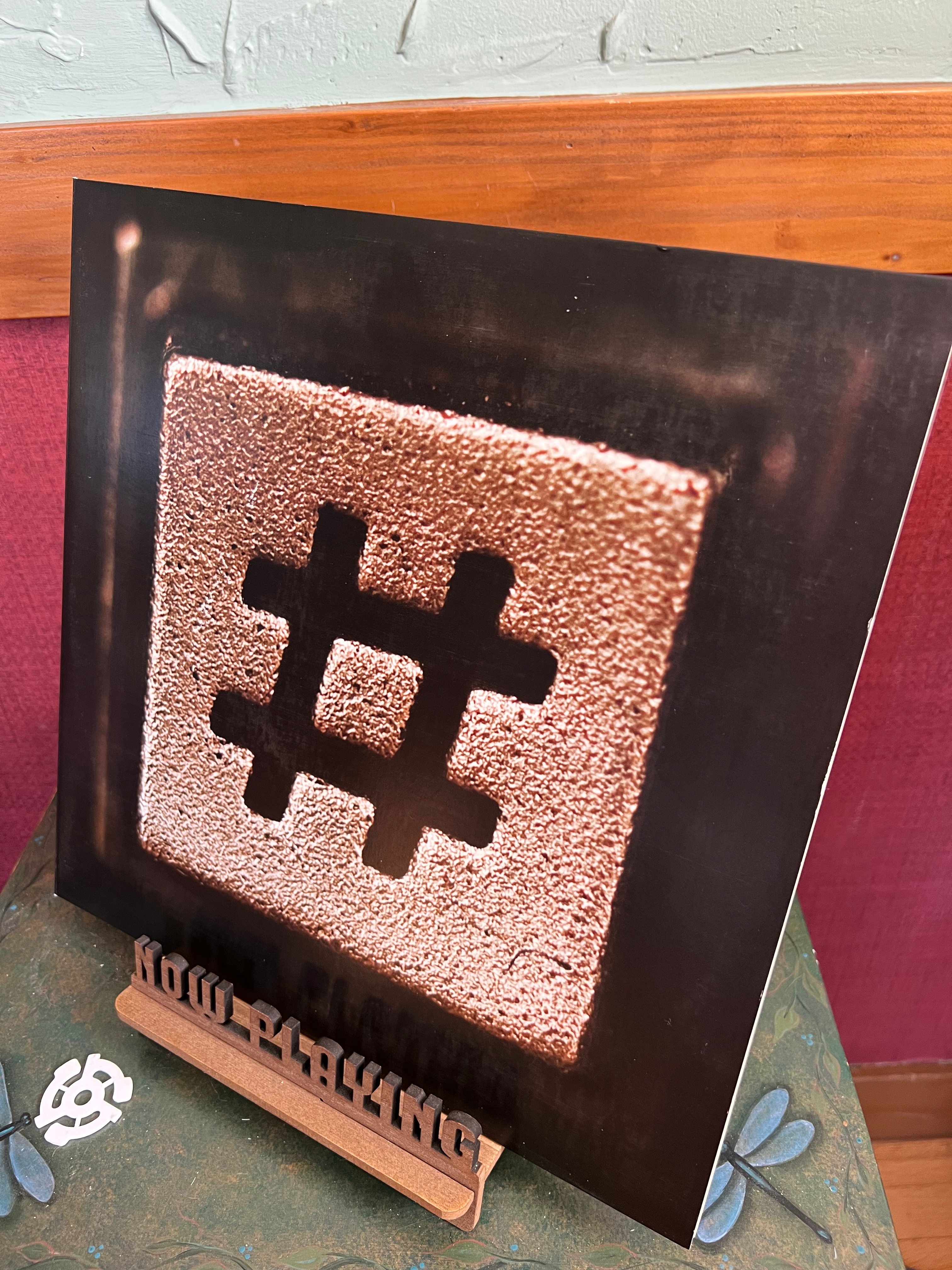
I must confess right away
my affinity for singers who sound
like Kermit the Frog. It’s a soft,
comforting tenor with just a
little bit of nose-forward. It’s not an
exact match, but if you listen
to Benjamin Gibbard, close your
eyes, and imagine Kermit, you’ll
see what I mean.
Codes and Keys was one of the
first records I bought as I returned
to vinyl after a long hiatus where
I bought nothing but CD’s. Surprised
by the heft of it, it was also one of my
earliest initiations into heavyweight
vinyl, and with that, my first album
with only ten or eleven songs spread
out over two records. At first I was
annoyed by turning the record
over after two or three songs, but
I have grown to appreciate the nerdy
audiophile aesthetic of widening grooves.
I have been, since 2003, loyal to
Death Cab for Cutie, even going back
after Transatlanticism as far as 1998 for
Something About Airplanes. Moving
forward, I have nearly everything
they’ve done. I love them, but it’s not
a rabid kind of love. I find them
comforting, easy, like a soft pillow.
Today I listen to four full albums
and one e.p. in quick succession
(over the course of about 4 hours)
and it’s almost like I’ve been listening
to one very long album. I like them
best when they get weird, those
little bursts of experimentation that
appear at least once on every album,
and I like the slow quiet stuff, because,
in the same way Kermit has the power
to do, Ben Gibbard’s gentle voice
and his thoughtful, super specific and
smart lyrics often give me the feels in
a big way. From Kintsugi:
“you’ve haunted me all
of my life,” followed immediately by
“my love, why do you run?/for my hands
hold no guns.” Bring me a hanky.
Or, “60 and Punk” from Thank You For
Today, his homage to Peter Buck”s
rise and fall and rise again.
But, boy, these kids can rock, and
Gibbard has this beautiful move of
spreading a long slow melody over
the top of a raucous, thumping,
up-tempo groove. And now and again,
a lyric move that is simply delicious:
“I wanna know the measure from here
to forever/I wanna feel the pressure of god
or whatever.” Love that internal rhyme
coupled with the ending rhyme–if you
like lyrics that rhyme, that’s a smooth move,
in addition to being a wonderfully
paradoxical idea, you know, god,
or whatever. And this wonderful line,
probably penned during the pandemic,
although it’s impossible to know for sure:
“These days I miss strangers more than
I miss my friends.” Even though the song’s
not really about that, I can’t help thinking
about everyone walking around all the
time, masked and distanced, a time
when meeting new people was almost
an impossibility.
The earlier Death Cab in my collection
is all on CD, and while I’ve loved everything
I listened to today, I find myself missing
some of that earlier material–not to say
that it was better–only when I heard it
for the first time, fresher, obviously.
These guys are consistent almost to a fault
and it’s tempting to think maybe that
the earlier records might be more brash,
more daring. At least, what is certain from
my point of view, is that here
is another band that doesn’t know how
to make a bad album.
Notes on the vinyl editions: Codes and Keys, Barsuk Records, 2011, black double vinyl. Kintsugi, Barsuk Records, 2014, double vinyl, tan/gold disc one, opaque white disc two. Vinyl package included a CD copy of the album–which I love. Early in my second phase of vinyl collecting, records often came with a download card, sometimes a CD copy of the record. I used to get so mad when either of these were missing from the package–and then came the streaming revolution, for better or worse. Mostly for worse. I haven’t found a download card or a CD copy in years. Thank You For Today, Barsuk Records, 2018, clear vinyl. The Blue EP, Barsuk Records, 2019, aqua blue vinyl. Asphalt Meadows, Barsuk Records, 2022, opaque pink vinyl.
FYI: I’m listening to almost everything in my vinyl collection, A to Z, and writing a long skinny poem-like-thing in response for each artist. As a poet and a student of poetry, I understand that these things look like poems, but they don’t really sound much like poetry, hence, I call them “poem-like-things.” I’ll admit that they’re just long, skinny essays that veer every now and then into the poetic.
 michael jarmer